30-Day Challenge Season Begins

Meditation, for me, has been what Gretchen Rubin classifies as a red herring habit, one of those things you always say you are going to do, but have no intention of doing. The art of sitting still has always alluded me. I remember the torture of every Sunday having to sit quietly on a hard pine pew through lengthy Catholic masses. My mind and body were not designed for passive pursuits. It’s even difficult for me to sit through an entire movie at the theater.

However, it is 30-day challenge time in my classes, an assignment designed to tie research to practical application in my college composition classes. It has been, for the last three semesters, a highlight for me. I feel like I am making an impact beyond a student’s ability to punctuate and organize paragraphs. After researching his topic, one student wrote in a reflection, “In writing this paper, I’ve come full circle. The emotions I felt at the beginning to where they are now as I wrap up, are complete opposites. I started this paper in a major slump, going to bed every night being sad and waking up every morning not looking forward to the day. As I finish, I’ve taken all the information I’ve researched and placed it in my life so now I look at each day as a blessing- and each day is open to an endless amount of possibilities if you have the right mind set to see it that way.” I printed this out and put it on my wall to remind myself of the big picture when I am buried in the perfunctory rituals of grading.

Inspired by my students, I began meditating today. I chose a short guided meditation by Sam Harris as my starting point. Through the Tim Ferriss Show podcast, I was introduced to his philosophical work and felt an intellectual connection with many of his ideas. I trusted him to start me off right on this journey.

As I sat in lotus leaf position on the floor of my office, I felt I was somehow cheating by listening to a voice. It gave me something else to focus on besides my breathing, which made the experience more endurable. The most helpful advice in the guided meditation was, when a stray thought enters your mind, to visualize the thought and remove it from your mind. It did this increasingly as the meditation went on. The most distracting thought was, when will this end? Nine minutes never felt so long. I actually popped up ten seconds before it ended because I could not stand it any longer.

Despite my agitation at the end, I feel more relaxed. I think much of the relaxation comes from the changes to my breathing. Most of my time in meditation was spent focusing on the inhaling and exhaling of my breath. This made me breath in and out more slowly and deeply. I am curious to see what other benefits I will gain over the course of the next 30 days.

Ode to Lazy Days

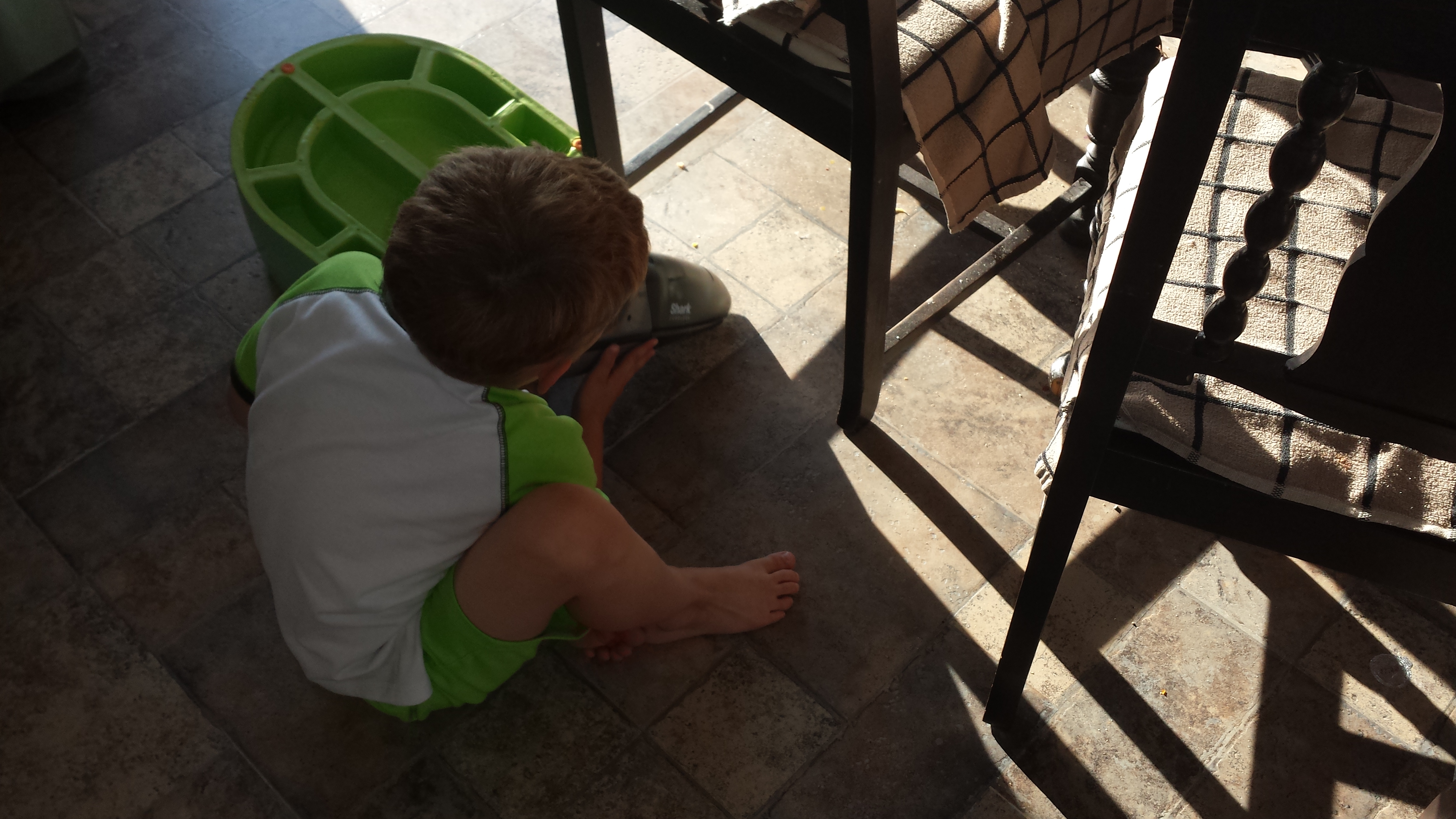
Today I awoke to complete lethargic contentment. It is rare for me to feel this way, but thanks to a vigorous workout and a few too many vodka tonics yesterday (any drink beyond one is always one too many for me), I was satisfied to curl on the couch with a “bodice-ripper” novel and let the hours slide by. Did my son play on the Xbox a little too long? Probably. Did I forget to steam mop the floor after some overzealous watermelon consumption? Definitely.

I did manage to print out a few Internet worksheets for the kids and felt I met some sort of minimum quota, the same feeling I get when I give them multivitamins with their microwave pancakes in the morning. By midafternoon, I did begin to feel the pull of the unloaded dishwasher, the unanswered emails, the unfinished coursepack, etc. But I soldiered on, maintaining my snail pace strolls from couch to chair to couch to chair. Occasionally, my husband joined me on this journey to nothing, and it became somewhat of a competitive sport, which I am calling “I’m not getting up.”

All and all, it was a restorative experience this mini-mental hibernation. I highly recommend a day of nothing.

30-Day Challenges: Self Discoveries on the Journey to Habits

My students are wrapping up their 30-day challenges this weekend. One of my students, who challenged herself to drink more water, wrote in her journal this week that she now can’t go long without drinking water. It has now become a habit. Research states that 40% of our daily actions are habits. They great thing about habits is that they do not require will power – they are programmed actions into our life that we automatically expect to complete. Once you get use to exercising every morning, it is harder not to exercise than it is to exercise.

Before my 30-day blogging challenge, I felt a bit at loose ends as a writer. Last summer, I completed my dissertation, which was the accumulation of years of researching and writing on new media and critical pedagogy. While I enjoyed much of the process, I also felt burnt out on academic writing at the end. Before pursuing my Ph.D., I was a journalist and a creative writer. My blogging challenge allowed me to begin to put the pieces of my many writing selves together.

It also helped me move from drafting to sharing. While I have written for years, I rarely share my words. Writing is immensely personal. I put off exposure through lengthy editing, rewriting the same paragraphs and pages over and over. Blogging does not allow for shyness or perfectionism. As Andrew Sullivan once wrote, “You can’t have blogger’s block. You have to express yourself now, while your emotions roil, while your temper flares, while your humor lasts. You can try to hide yourself from real scrutiny, and the exposure it demands, but it’s hard.”

What I like best about these challenges, though, are the unexpected benefits. For me, it was how blogging shaped my daily life. You cannot blog if you are not thinking, experiencing, and reading. I became more mindful of what I was doing so that I could articulate the purpose, and I pursued more out of my box experiences in order to have something interesting to share.

Now, I am learning more about my relationship with food and my food’s relationship with my body through my gluten-free challenge. Wish me luck!

Day One: Gluten-Free

In the spirit of “you won’t know until you try it,” I began my 30-day gluten-free challenge today. As I previously wrote, my doctor believes in lifestyle changes over medications and that the secret to improving my digestive health is to go gluten-free. Her other key piece of advice is to chew my food 50 times, a feat I have yet to achieve.

20150528_170637

I’m beginning today, in order complete the challenge before July 13th, because I cannot have a birthday without cake. Perhaps before then I will have perfected a gluten-free cake. However, I am probably the only one in my house that would eat it. I did beg my husband to join me on this journey of sacrifice in the name of science. He, like others I have discussed this with, believe that because civilization has thrived through many eras of breaking bread, it must not truly be harmful.

I understand this point of view. The counterpoint I read discusses how the grain of today is not the grain of yesteryear. It has become increasingly processed and genetically modified. Another counterpoint is that the ratio of fat, protein, and carbohydrates was radically different in earlier times as well. Hence, the Paleo Diet, which I’m still not convinced is a legitimate representation of caveman cuisine. Perhaps, this will be a future challenge.

Honestly, I am not sure what I want the outcome of this test to be. If it is beneficial, it means that I can never eat grain again with a clear conscious. If it is not beneficial, it means I need to find a new doctor, who is not swept up in the current diet fad. So far, I’m just hungry and moody. I understand that I am in what is called a detoxing period. Only 29 more days…

Today’s consumption:

Egg whites with sauteed “power greens,” an orange pepper, and onions

A luna bar

An Activa Greek Yogurt

Carrot sticks

Peanut butter and celery

Baked tofu stirfry with tofu noodles

Stoneyfield Strawberry Banana Yogurt (designed for toddlers, perfect for end of the night, there is gluten in my Ben& Jerry tantrums)

I’m committed to overcommitting

What drives us to overburden ourselves? According to researchers, we, the overcommitters, operate under the misconception that we will have more time tomorrow than we do today. However, this mythical tomorrow full of free time never arrives, so we scramble to meet the promises and commitments we made. I knew I had a problem today when an old friend cancelled on our plans tonight, and part of me was relieved. In my effort to make the most of my time, I left myself no time.

The night before I was in a professional development class to become a better reading instructor. Today, I had my spring teaching load, my writing center duties, and popped into a podcasting class to steal some learning. How does one steal learning you ask? Well, when you are so overcommitted you cannot attend a whole class, you ask the instructor to let you sit in on half the class. I try to contribute knowledge during discussions, but really I am just a freeloader in the backrow doing some live Tweeting. This is all before school lets out and I begin my other full-time job as a parent.

So when my friend cancelled, I decided to stay in and enjoy a little reprieve from the pinball machine action that keeps me popping through the shoot. Okay, not really. I’m just moving from one machine to another—external commitments to internal commitments. Exhibit A: Blog post. The productivity machine is hungry, so I feed it.

My goal for the magical day known as tomorrow, where anything is possible and time is limitless, is to budget some downtime with a glass of wine on the back porch and invest in the art of doing nothing. Of course, to do this, I will probably have to research various philosophical theories on ” doing nothing,” take notes while sitting on the porch, perhaps live Tweet descriptions of the sounds I hear, and then go in the house and write about the experience.

Hashtag Failure: My First Twitter Party Contest

In the spirit of trying new things, I entered my first Twitter party contest –unfashionably late. Who starts a contest for a family vacation at 8 p.m. on a school night? Bedtime is stressful enough without worry about answering questions on your favorite features of the Kalahari Resort in Poconos. By time I began, the “hosts” were already on question four.

Note to self: if you cannot attend on time, ignore the hashtag and move on with your life. I put in a good last minute effort. However, I was flustered. I forgot to use the hashtag on my first go around. I spent WAY too much time crafting my words. From my observations, speed is what matters. Reply fast, favorite everything, and retweet like your life depends on it. Also, do not be afraid to use cute photos of your children to draw attention to yourself. Sell, sell, sell those adorable faces that will be crushed if they are not given a free trip to a waterpark.

Overall, I was clearly in over my head. I looked at some of the winners who were negotiating multiple contests at once. I was willing to dabble, but I am not ready to devote my evenings to marketing products and places in order to have a chance to win a freebie. My hat is off to those who have the dedication, patience, fast fingers, and followers for such endeavors. I will quietly go back to my books and meditations.

A Herculean Challenge: The 12 Labors of Tucker

One reason I dislike my children watching regular, non-PBS cable TV is the commercials, those 30-second seductions perfectly geared to Id-driven young children. Last week my son begged me to take him to Popeye’s Chicken, as if it were a five-star restaurant. This week it is the hamper hoop, which is exactly what the name indicates, a laundry basket with a basketball hoop. I placed a laundry basket under the small indoor basketball hoop we already have and said, “Voila.” My six year old was not impressed.

My husband and I have no clear policy regarding buying nonessential items when it isn’t a birthday or holiday. And right now, our son is not ready to manage his own money. If we unlocked his piggy bank, I guarantee it would be followed by a binge of impulse spending. I also did not want to do a trade — if you do this activity, you will get this reward. According to Daniel Pink’s book Drive, we shouldn’t give rewards for chores, as that creates an expectation. The logic being if I pay them once for making their bed, why should they ever make it for free again?

My solution was to introduce my son to the twelve labors of Hercules. As luck would have it, a children’s version was available online and I was able to introduce him to Greek mythology and give him a way to earn his hamper hoop. To acquire it, he needed to come up with twelve challenges. Some of the challenges he came up with were to complete a puzzle, pick up his toys, read a book to his sister, and complete a craft. He isn’t strangling lions or moving rivers, but unlike Hercules, he is not going for immortality, just a glorified hamper.

20150531_192742

38… I’m going to own it

My friends and I, who are all in our late 30s/early 40s, have experienced the same phenomenon regarding old pictures of ourselves — the phenomenon is called “damn girl.” Damn girl, look at that body. Damn girl, you are cute. We remember ourselves in our teens and twenties and wonder, why were we not more confident? Why were we nitpicking our thighs and fretting about a pimple? We ask this, yet still continue the same behaviors of our youth, hiding behind someone in a group photo and stuffing ourselves into shapewear. Why do we not appreciate what we look like in the moment?

Earlier this week a student asked me how old I am. I did not demur or offer a ballpark figure (mid-30s). I proudly proclaimed myself to be 37 years old. For a moment, I felt I had finally reached a higher state of enlightenment and self acceptance. I was owning it. Then came the follow up question, when is your birthday? This class is an annoyingly curious bunch. I less enthusiastically answered July. I am not ready to own 38. In this moment I realized I only love my age about two months of the year, when I realize it is fleeting and soon to be replaced with a higher number.

Luckily, studies show that with age comes greater self acceptance, so this will get easier.

When Yes Became No

When I began my professional journey applying for internships as an undergraduate journalism student, my mantra was to always say yes. Whenever an opportunity arose, I took it. By the time I graduated from college, I had completed five internships for a variety of nonprofit organizations, an advertising agency, and a newspaper. At the age of 22, I became the head of cable company marketing department. At 23, I was the editor of an alumni magazine for a liberal arts college and running my own freelance business. I took graduate classes simply on a whim, because I could. Now I am a college professor.

My mantra began to change after I had children. Instead of pursuing endless opportunities, I needed to set boundaries between my work and personal life. It took many meltdowns of mother and child, an endless stream of late night grading, and many disgruntled meetings where I wondered, why am I here?, before I arrived to this moment.  And this moment is not perfect.

Whenever an opportunity arises now, I realize I am not simply saying yes or no. Every time I say yes to something I am saying no to something else. When I said “yes” to the gym this morning, I said “no” to vacuuming. When I decided to sit in on a podcasting class, I was no longer able to join a book circle. It is for moments like these that the hashtag #firstworldproblems was born. My cross to bear is too many opportunities.

The benefit of too many opportunities is that is has forced me to reflect on what it is that I really what to do. It should be a simple task to do what you truly want, but often we are trying to do what we think we should want to do or what some nonexistent version of ourselves would do. Right now, I just want to go to sleep, even though it is only 10 p.m. and the cool kids stay up until at least midnight 🙂

Carrot Cake is not my Madeleine

“An exquisite pleasure had invaded my senses, something isolated, detached, with no suggestion of its origin. And at once the vicissitudes of life had become indifferent to me, its disasters innocuous, its brevity illusory – this new sensation having had on me the effect which love has of filling me with a precious essence; or rather this essence was not in me it was me. I had ceased now to feel mediocre, contingent, mortal. Whence could it have come to me, this all-powerful joy? I sensed that it was connected with the taste of the tea and the cake, but that it infinitely transcended those savours, could, no, indeed, be of the same nature. Whence did it come? What did it mean? How could I seize and apprehend it?” – Marcel Proust

Ever since I discovered the meaning of a Proustian Moment, I have wanted to experience one. When I stumbled upon my old carrot cake recipe, I thought perhaps I hit paydirt. About ten years ago I went on a quest to make the best carrot cake possible for my husband’s 30th birthday. Through an amalgamation of recipes, I came up with what I believed to be the best. I remembered it as gooey and sweet, an ambrosia of carrots, pineapple, and coconut under a thick blanket of cream cheese frosting.

When I bit into the cake, no memories rushed back to me. The rich, sensory overload of early love did not infuse my mind. I did not remember the unencumbered, pre-children days where I could be eating cake at two in the morning with a group of friends with nothing on my horizon but a lazy Saturday and Sunday. Instead, I bit into the cake and thought, too much carrot.

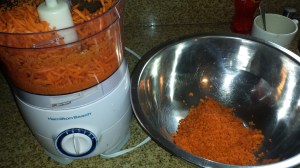
The recipe calls for three cups of carrots and usually I used the Bolthouse Sweet Petites to grind up in my food processor. Instead, I was seduced by the sale price of some organic matchstick carrots at Meijer’s. Lesson one: you cannot get the same cake with different ingredients. Yes, there is a metaphor embedded here.

20150515_171840

I had also forgot the extravagance of the ingredients: two cups of white flour, two cups of granulated sugar, one and a half cups of vegetable oil, and four eggs. It seemed treasonous to cover and soak my organic carrots in this. Oh, to have the metabolism of my 20s again!

20150515_172733

Clearly, Proust was not worried about his waistline when he was dipping the infamous madeleine in his tea. He certainly did not practice moderation in his sentence lengths:

“And as in the game wherein the Japanese amuse themselves by filling a porcelain bowl with water and steeping in it little pieces of paper which until then are without character or form, but, the moment they become wet, stretch and twist and take on colour and distinctive shape, become flowers or houses or people, solid and recognizable, so in that moment all the flowers in our garden and in M. Swann’s park, and the water-lilies on the Vivonne and the good folk of the village and their little dwellings and the parish church and the whole of Combray and its surroundings, taking shape and solidity, sprang into being, town and gardens alike, from my cup of tea.”

What decadent syntax!

Back to my unproustian moment: I remember that the cake took a full hour to bake at my old house before the toothpick would come out cleanly. Here, at 40 minutes, it showed signs of being overdone.

The best cake moment came not when I tried to reproduce the past but to improve upon it. I found cream cheese frosting recipe, so good, eating it could be called a religious experience: http://realhousemoms.com/best-cream-cheese-frosting/

My taste buds sang like the Mormon Tabernacle Choir.

20150515_194438

“But when from a long-distant past nothing subsists, after the people are dead, after the things are broken and scattered, taste and smell alone, more fragile but more enduring, more unsubstantial, more persistent, more faithful, remain poised a long time, like souls, remembering, waiting, hoping, amid the ruins of all the rest; and bear unflinchingly, in the tiny and almost impalpable drop of their essence, the vast structure of recollection.”

In conclusion, even if I used the same carrots and baked the cake in the same oven, I do not believe I would have experienced a Proustian moment. I suppose the years altered me in such a way that not even tastes arouse the same visceral actions.

My unproustian carrot cake recipe:

  • 3 cups grated carrots (I recommend sweet petite baby carrots)
  • 2 cups all-purpose flour
  • 2 cups white sugar
  • 2 teaspoons baking soda
  • 1 teaspoon baking powder
  • 1/2 teaspoon salt
  • 4 eggs

  • 1 1/2 cups vegetable oil
  • 2 teaspoons vanilla extract
  • 1 (8 ounce) can crushed pineapple with juice
  • 1 cup shredded sweetened coconut

Bake for 40 minutes at 350 degrees.