Mr. Sketch and the Morning of Doom

The final fifteen minutes before it is time to leave the house I feel like Indiana Jones, navigating a booby-trapped cave. Every moment is fraught with peril: the serving of breakfast, the selecting of clothes, the powering down of electronics. Today, the rolling boulder coming towards me goes by the name of Mr. Sketch. The scented Mr. Sketch markers are the Air Jordans of first grade, an aromatic status symbol that comes in an array of twelve colors. For weeks, my son begged for these markers, going as far as putting them into my Amazon shopping cart.

When they arrived in the mail, it was a celebration of rainbows. For the next week, my son and daughter both sported Mr. Sketch mustaches from all the aggressive sniffing. However, there was one blemish in my son’s happiness. The markers were for home use only, to be shared with his little sister. Every morning he would try to sneak them into his backpack, and every morning I would remove them. Today he caught on to me catching on to him and checked his bag that I dutifully packed with his lunch and homework and found no Mr. Sketch. It was 8:25 a.m., time to leave the house. Let loose the boulder.

In the face of a tantrum, rationalizing only does so much. However, I still tried, calling to mind every parenting book and calmly explaining we had already told him “no.” He countered with, “I only want to take them today.” We countered with, “This is a privilege that you need to earn. We can discuss how you can earn this privilege after school so that you can take them tomorrow.” Delayed gratification is not in his wheelhouse. I try not to think of the Marshmallow Test and what this means for his future. The tantrum escalates. It is now 8:30 a.m.

If I had a time machine, I probably would have hopped in and took away my “no.” Because, honestly, I did not care that much about the ink levels or potential disappearance of a marker. However, once a negative answer has been issued, I believe it cannot be taken back. A no cannot be made into a yes by whining or crying. I am a stressed, heartsick woman of my word.

In a situation such as this, where reasoning is not an option, I believe the experts would recommend I remove the child from the situation. So I carried my son into the vehicle, squirming and crying and shoeless. To my credit, I did not raise my voice. I simply grabbed our coats, our bags, and his shoes and threw them in the vehicle and let him kick the back of my seat all the way to the elementary school. Tonight on Amazon, I believe I am going to order an Indiana Jones style whip.
When Yes Became No

When I began my professional journey applying for internships as an undergraduate journalism student, my mantra was to always say yes. Whenever an opportunity arose, I took it. By the time I graduated from college, I had completed five internships for a variety of nonprofit organizations, an advertising agency, and a newspaper. At the age of 22, I became the head of cable company marketing department. At 23, I was the editor of an alumni magazine for a liberal arts college and running my own freelance business. I took graduate classes simply on a whim, because I could. Now I am a college professor.

My mantra began to change after I had children. Instead of pursuing endless opportunities, I needed to set boundaries between my work and personal life. It took many meltdowns of mother and child, an endless stream of late night grading, and many disgruntled meetings where I wondered, why am I here?, before I arrived to this moment.  And this moment is not perfect.

Whenever an opportunity arises now, I realize I am not simply saying yes or no. Every time I say yes to something I am saying no to something else. When I said “yes” to the gym this morning, I said “no” to vacuuming. When I decided to sit in on a podcasting class, I was no longer able to join a book circle. It is for moments like these that the hashtag #firstworldproblems was born. My cross to bear is too many opportunities.

The benefit of too many opportunities is that is has forced me to reflect on what it is that I really what to do. It should be a simple task to do what you truly want, but often we are trying to do what we think we should want to do or what some nonexistent version of ourselves would do. Right now, I just want to go to sleep, even though it is only 10 p.m. and the cool kids stay up until at least midnight 🙂

Carrot Cake is not my Madeleine

“An exquisite pleasure had invaded my senses, something isolated, detached, with no suggestion of its origin. And at once the vicissitudes of life had become indifferent to me, its disasters innocuous, its brevity illusory – this new sensation having had on me the effect which love has of filling me with a precious essence; or rather this essence was not in me it was me. I had ceased now to feel mediocre, contingent, mortal. Whence could it have come to me, this all-powerful joy? I sensed that it was connected with the taste of the tea and the cake, but that it infinitely transcended those savours, could, no, indeed, be of the same nature. Whence did it come? What did it mean? How could I seize and apprehend it?” – Marcel Proust

Ever since I discovered the meaning of a Proustian Moment, I have wanted to experience one. When I stumbled upon my old carrot cake recipe, I thought perhaps I hit paydirt. About ten years ago I went on a quest to make the best carrot cake possible for my husband’s 30th birthday. Through an amalgamation of recipes, I came up with what I believed to be the best. I remembered it as gooey and sweet, an ambrosia of carrots, pineapple, and coconut under a thick blanket of cream cheese frosting.

When I bit into the cake, no memories rushed back to me. The rich, sensory overload of early love did not infuse my mind. I did not remember the unencumbered, pre-children days where I could be eating cake at two in the morning with a group of friends with nothing on my horizon but a lazy Saturday and Sunday. Instead, I bit into the cake and thought, too much carrot.

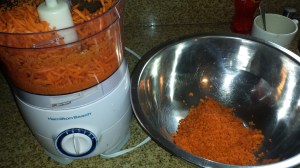
The recipe calls for three cups of carrots and usually I used the Bolthouse Sweet Petites to grind up in my food processor. Instead, I was seduced by the sale price of some organic matchstick carrots at Meijer’s. Lesson one: you cannot get the same cake with different ingredients. Yes, there is a metaphor embedded here.

20150515_171840

I had also forgot the extravagance of the ingredients: two cups of white flour, two cups of granulated sugar, one and a half cups of vegetable oil, and four eggs. It seemed treasonous to cover and soak my organic carrots in this. Oh, to have the metabolism of my 20s again!

20150515_172733

Clearly, Proust was not worried about his waistline when he was dipping the infamous madeleine in his tea. He certainly did not practice moderation in his sentence lengths:

“And as in the game wherein the Japanese amuse themselves by filling a porcelain bowl with water and steeping in it little pieces of paper which until then are without character or form, but, the moment they become wet, stretch and twist and take on colour and distinctive shape, become flowers or houses or people, solid and recognizable, so in that moment all the flowers in our garden and in M. Swann’s park, and the water-lilies on the Vivonne and the good folk of the village and their little dwellings and the parish church and the whole of Combray and its surroundings, taking shape and solidity, sprang into being, town and gardens alike, from my cup of tea.”

What decadent syntax!

Back to my unproustian moment: I remember that the cake took a full hour to bake at my old house before the toothpick would come out cleanly. Here, at 40 minutes, it showed signs of being overdone.

The best cake moment came not when I tried to reproduce the past but to improve upon it. I found cream cheese frosting recipe, so good, eating it could be called a religious experience: http://realhousemoms.com/best-cream-cheese-frosting/

My taste buds sang like the Mormon Tabernacle Choir.

20150515_194438

“But when from a long-distant past nothing subsists, after the people are dead, after the things are broken and scattered, taste and smell alone, more fragile but more enduring, more unsubstantial, more persistent, more faithful, remain poised a long time, like souls, remembering, waiting, hoping, amid the ruins of all the rest; and bear unflinchingly, in the tiny and almost impalpable drop of their essence, the vast structure of recollection.”

In conclusion, even if I used the same carrots and baked the cake in the same oven, I do not believe I would have experienced a Proustian moment. I suppose the years altered me in such a way that not even tastes arouse the same visceral actions.

My unproustian carrot cake recipe:

  • 3 cups grated carrots (I recommend sweet petite baby carrots)
  • 2 cups all-purpose flour
  • 2 cups white sugar
  • 2 teaspoons baking soda
  • 1 teaspoon baking powder
  • 1/2 teaspoon salt
  • 4 eggs

  • 1 1/2 cups vegetable oil
  • 2 teaspoons vanilla extract
  • 1 (8 ounce) can crushed pineapple with juice
  • 1 cup shredded sweetened coconut

Bake for 40 minutes at 350 degrees.

The Superhero Workout – Fasten Your Capes

The number one rule of App selection is know thyself — how do you like to work, study, cook, read, etc. Apps should augment your lifestyle and productions, in short make it easier to be the awesome person you were meant to be. As a working mom, I find it difficult to make time to go to the gym. I discovered, though, that I can do workouts with my children if there is a novelty involved. We each have our own stability ball and often roll around the floor trying to imitate the moves on Youtube workout videos. So when I stumbled upon the app Superhero Workout, I thought it could be another workout we could do as a family.

It also indicated some level of novelty, which I thought would intrigue me enough to engage in activities I do not enjoy, such as jumping jacks, mountain climbers, and other moves designed to torture my body. For $4.99, it delivers some level of novelty, though not as much as I would like. It delivers the “super-hero” feel through overlaying standard exercise animations with an audio storyline. However, when you are panting through high knee jogs, it is hard to follow along with the mission details. The app designers, though, did a decent job coordinating the plot with the exercise sequence. For instance, when you are defeating whatever enemy is upon you in the story, you are also doing boxing moves. When it is nearing the end of the 25-minute workout, the mission shouts words of encouragement, asking that you not give up. Still, I find standard workout music (think Rocky soundtrack) is a better motivator than imagining I am “clearing out spores.”

While I did not have high expectations for the camera tracking feature, as this is an Ipad app not an Xbox Kinect game, the workout design made tracking even more difficult. For the standard workout, you needed to be able to use a wall, a chair, and stairs. Unless I constantly repositioned the IPad, and subsequently missed a few reps of the workout, some of my moves wouldn’t be tracked. This wasn’t a big issue for me, though, as I was doing the workout moves with a five year old and three year old at times, so I had already discounted the possibility of accurate rep and calorie count. Still, I think the tracking feature is a nice one to include in a fitness application. Tracking works well as a motivator. You feel watched in a way that you do not when you are going through a workout DVD. It’s not the same social pressure as not keeping up in a face-to-face physical fitness class, but it is something.

I like that the game has set up a series of short workouts to choose from in addition to their “missions.” Times vary from 7-11 minutes, so you can do a quick general workout or several target area workouts. The mission workouts range from 16-25 minutes. My children could not keep up physically or mentally with a workout that long. Midway through our second mission workout, as we began jumping jack squats, my three year old stopped and said she couldn’t go on because she “lost her powers.” Later in the workout, amazed that I was still doing the moves, my five year old chanted, “Mama’s a superhero! Mama’s a superhero!” I found this to be the most motivating moment of the workout, as honestly, nothing makes me feel less superhero-like than a push up. The best part for our little family is the workouts that end with the superman move, where you lay on the floor and simultaneously hold up your arms and legs, probably because this is the most superhero-like move.

photo

Overall, this app motivated me to do exercise moves that I usually avoid. I like it doesn’t make me do a lot of repetitions of one move but constantly changes, usually switching moves every 30-60 seconds. This keeps me from getting bored or giving up when there is a move I particularly hate, such as burpees. I do like that there are 20 different missions and 46 different achievements you can obtain. It makes it as much a game as a workout. If I were to improve upon this game, I would add some graphical interludes during the missions instead of having it simply be an audio story. This would help orient me in the mission and make the experience more immersive. Something for Six to Start, the game designers, to consider as they work on their next game/exercise app.

Defining and Inspiring 30-day Challenges

Today, I am inviting you into my classroom. Our goal is to create a life experiment to potentially form a new habit. For inspiration, I played two different TED talks in class. The first, “Try something new for 30 day” by Matt Cutts, is essentially a three-minute commercial on why people should embark on a 30-day challenge. For the second video, I gave my class the choice of two A.J. Jacobs talks, one about his year living Biblically and one about his quest to live as healthily as possible. Both illustrate a writer who sets out on a quest for knowledge by asking one key question, what if?

A.J. Jacobs’ work is a great model for the famous Ken Macrorie assignment, the I-Search essay, which is essentially a research narrative told in the first person. The added bonus is of course the reality TV-esque component, where we get to read about A.J. taking all advice to the extreme. It’s the print version of Morgan Spurlock’s 30 days. I also find his work more every-man, than the less accessible, but still highly entertaining life experiment guru Tim Ferriss.

If anyone wants to follow along at home, we are reading an excerpt from My Life as an Experiment, “The Unitasker.” Here A.J. Jacobs seriously pursues the concept of mindfulness, a big buzz word in our multitasking digital age.

My Crazy Klimtian Dream

Have you ever had a weirdly specific vision you wanted to turn into a reality? I have had many of those since I was a small child. Every now and again a fancy would seize me, an inspiration fever. I remember at the age of four shoplifting smurf tissue paper from a shoe box in Norman’s because I knew it would make the perfect wallpaper for my dollhouse. Unfortunately, my mother did not agree with my method of procurement and marched me back into the store. Many such visions have struck me since with varying levels of success.

My latest vision, which has haunted since the fall, is a Gustav Klimt inspired mixed media rendering of the Queen of Hearts. Oddly specific, right? Tonight, I finally put some lines on a large blank canvas. It’s important to note that I have owned this large canvas for several months and have been rendered impotent by its white yawning expanse. Also, I am not an artist, but an English professor. So this was a momentous first stroke. I don’t know where it will lead, but it is now going somewhere.

20150511_212658 20150511_214937

A True Mother’s Day

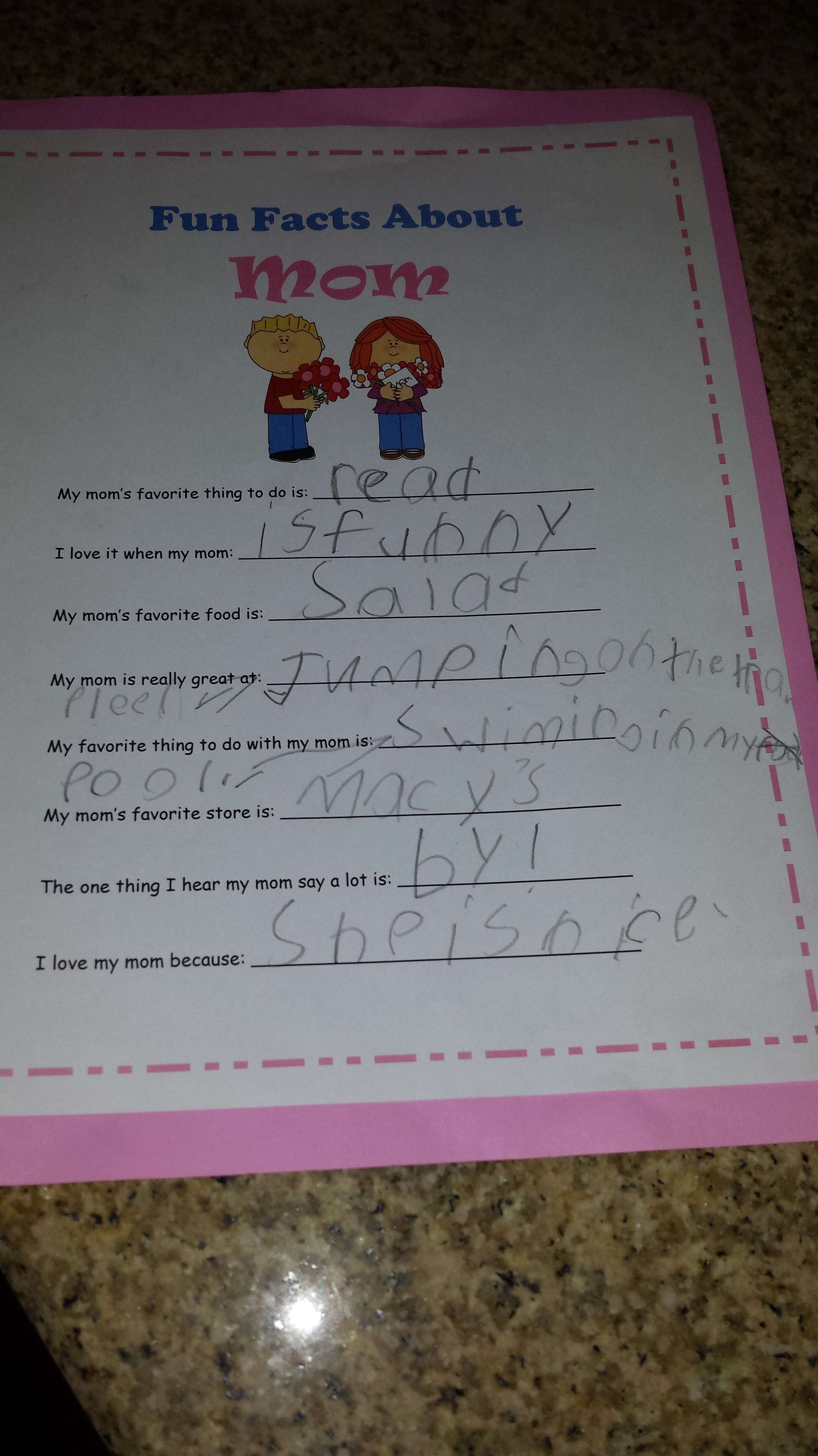
On Mother’s Day I wake up a half hour early so I can sneak out of bed before anyone gets the clever idea of bringing me breakfast and to have a moment of peace before I receive my sanctioned doses of gratitude. At 6:30 a.m., my son assured me that we can play games all day because mother’s day means getting to do whatever I want. We clearly have different definitions of what I “want.” However, after waking up with a timeline full of Facebook tributes to mom, I feel compelled to bring my “A” game. Also, I remain haunted by the All about Mom Questionnaire my son brought home from school.

20150508_170359

Number seven is a dagger to the heart. Luckily, his answering that my favorite food is salad throws the validity of form into question. I rationalize that he was probably thinking of the words he hears every morning when I drop him off to school (that’s right drop him off because I am too soft-hearted to make him ride the bus). Still, even in this context, it pushes the big flashing guilt button every working mom has.

Adding to the damning questionnaire is the history lesson of the day that Mother’s Day was created to pay homage to the great work done by women. In particular, Anna Jarvis wanted to recognize her mother Anne Reeve Jarvis, who spent her free time (a whole other concept in the 1860s) teaching women how to care for their children. Only four of her eleven children lived to be adults due to poor sanitation and lack of vaccinations at the time. She also organized “Mothers’ Friendship Day” after the Civil War, which brought together mothers and soldiers from both the Union and the Confederacy in order to “promote reconciliation.” 

I realize now that allowing my daughter to use my bath tub today was not such a large sacrifice. After all, she did bring her own bubble bath. If we learn anything about the legends of motherhood, it is that self-sacrifice is a virtue. I tried valiantly to wear the mantle through sibling spats, six-year-old male rambunctiousness (my son’s new life ambition is to be a WWE wrestler), an endless round of storytelling in a cramped indoor fort, etc. Unfortunately, I am only human.

The day ends with my daughter first “accidentally” dropping a toy in the toilet and then later an entire roll of toilet paper. For the safety of all, I explained to her that she needed to remove herself from my line of vision. The mournful sound of “It’s a hard luck life” could be heard throughout the house from behind the closed door of her bedroom.

A hallmark holiday it was not. However, it was a true mother’s day.

It’s all THATcamp

Dr. Jen NM's avatarDigiCommons

Today I experienced the collaborative, anything-can-happen wonder that is THATcamp. An “unconference” where all participants are potential presenters, THATcamp stands for The Humanities and Technology Camp. Instead of beginning with what we could potential present, we began by listing on a whiteboard what we wanted to know. Then we marked the topics we were interested in discussing. The most popular topics became the headings of the day’s six sessions.

Photo by Dr. Amy French

The first session I attended discussed engaging students in an online environment. One of my colleague discussed how she sends her online students care packages in the mail. At one point in the semester, students send her back a postcard. She does this to add an element of “touch,” which she says students crave. I would call this an affective dimension, and it’s a strategy of engagement. In my face-to-face settings, students always comment on…

View original post 277 more words

Writing a Personal Mission Statement

I always preach to my students that research should be a discovery mission. If you only set out to prove one particular fact or support one particular viewpoint, not only are you missing out on the deeper complexities of an issue but you may be missing far more interesting or applicable information for your life. I could go on about the Filter Bubble created through niche marketing, algorithms, and seeking information through social media spheres, but I have already written exhaustively about this topic in my dissertation. Today is about mission statements.

My Google search began with how to better define my blog and what I hope to do here, aside from fulfill a 30-day challenge. In my new media writing class, my students fill out rhetorical situation questionnaries about their imagined audience, their topic stance, etc. However, I was interested in finding something more like a mission statement. What I found was a New York Times blog about creating a personal mission statement. Tara Parker-Pope quotes Stephen Covey, who refers to a personal mission statement in 7 Habits of Highly Successful People, as “defining the personal, moral and ethical guidelines within which you can most happily express and fulfill yourself.”

Parker-Pope then lists the common questions asked within the Corporate Athlete Program. I think the questions will be a great warm up to my challenge/habit driven semester. So to prepare, I will answer the questions given myself.

■ How do you want to be remembered?

I want to be remembered for making a difference and changing lives, whether it be through my teaching, writing, altruistic acts, or parenting.

■ How do you want people to describe you?

Big-hearted, humorous, inspiring, and creative.

■ Who do you want to be?

I want to be someone who lives up to my full potential and fulfills the expectations of both myself and of the people in my life.

■ Who or what matters most to you?

My family matters the most.

■ What are your deepest values?

My deepest values mirror my previous answers. I value purpose-driven work, kindness, personal expression, and laughter.

■ How would you define success in your life?

Success is making the world a better place through your decisions and actions.

■ What makes your life really worth living?

Making others feel good, empowered, inspired, and loved.

I think if I use this for my opening class I would have students choose three that they can write a full paragraph (five or more sentences) about. The questions overlap a bit, so I do not think it is necessary to answer them all, but it is still a good exercise. These questions would also work well for brainstorming This I Believe essays.

I thought I would escape the classroom with this blog. Instead, I took down the walls.

Work and Self Worth

In my second day off between semesters, fresh from a retirement party, I cannot help but think of the role work plays in our sense of worth. I found myself revisiting and playing with a poem I started about my father, who believes fervently in a hard day’s work and told me often when I did not want to do a task, “Think about how good you will feel when it is done.” The underlying message being our value comes from that which we do. I’ve lately come to classify him as an existential Catholic who believes we insert ourselves into the world first by baptism and then by deed.

We stood into the wind, already sweating underneath our dusty caps,

socks staining against the dirt gathered in the bottom of our sneakers.

The bean leaves ripple, showing their pale underbelly,

as the spindles whip shapes into the sky

My father grips a hoe with his big knuckled, turgid veined fist,

hands it to me and tells me where to begin.

“Think about how good you will feel when it is done.”

We crack the topsoil and sink our footprints into the loam,

Walking miles, scouring, our heads pendulum swinging side to side

I pull two-handed the embedded ragweeds, velvetleafs

We shake the clumps of dirt from their greedy roots

Until the soil sticks to our slick forearms, embeds under fingernails,

clings to the hair of our nostrils, and grits between my teeth.

“Think about how good you will feel when it is done.”

The lesson slides down my throat, as I tip the icy thermos,

lifts perspired threads of hair and fabric as I lean

into the rushing air from the back of the truck bed

and think of the crisp line formations of the crops